Guide No. 17 · The Castle Rolls
Slighted Castles
Ever wondered why so many British castles are dramatic half-ruins - a tower sheared in two, a keep split open, a gatehouse frozen mid-collapse? Most of the time the answer is not slow decay. It is a deliberate act of demolition carried out in the years after the English Civil War, and it even had a name: slighting.
To slight a castle is to deliberately wreck it so that it can never be held against you again - not usually flattening it completely, but pulling down a stretch of wall, blowing up a gatehouse or tower, and breaching the keep until no garrison could defend the place. The word comes from an old sense of 'slight' meaning to raze or level. It was done on a huge scale by Parliament in the years around the end of the English Civil War, roughly 1646 to 1651, and it is the single biggest reason Britain is dotted with spectacular partial ruins rather than with either intact fortresses or bare empty fields. When you look at a castle that seems to have been cut in half, you are usually looking at a political decision, not the work of time.
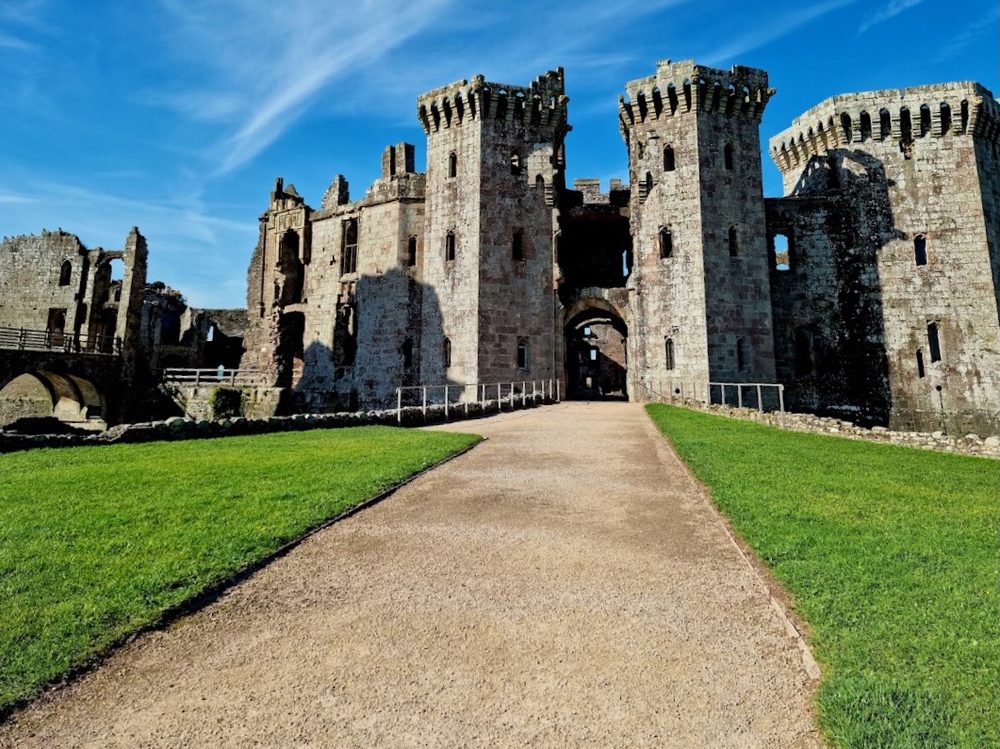
What slighting actually meant
The word sounds gentle and it was anything but. A slighting was a demolition job with a military purpose: to make a fortress indefensible. In practice that meant a few very specific targets. Bring down a long section of the curtain wall, so there is a permanent gap no one can hold. Wreck the gatehouse, the strongest and most defensible point of most castles. Breach the keep, the last redoubt. Fill in the ditches, and if the castle relied on water, drain it. Do those things and the building might still be three-quarters standing, but it is useless as a stronghold - and that, not neatness, was the whole point.
This is why slighted castles look the way they do. They are not gradually crumbled, and they are not swept away. They are violently, selectively broken: one wall gone and the next intact, a tower split down its height, a keep opened up like a doll's house. Once you know the pattern, you start seeing the deliberate hand behind ruins you might have assumed were just old.
Why Parliament pulled the castles down
The logic was cold and practical. By 1646 Parliament had won the war, and it had inherited a problem: hundreds of castles across England and Wales, most of which had been garrisoned and fought over. It could not afford to keep soldiers in all of them indefinitely. But an empty, intact castle was a standing invitation - walk in, shut the gates, and a handful of determined Royalists could tie down a whole army all over again. The Second Civil War of 1648 proved the danger real, when ungarrisoned strongholds were seized and had to be retaken at cost. Faced with a choice between garrisoning a castle forever or wrecking it once, Parliament increasingly chose the hammer.
Sometimes the demand came from below. Pontefract was one of the most stubborn Royalist holdouts of the entire war, enduring three separate sieges - and when it finally fell in 1649, it was the townspeople themselves who petitioned Parliament to demolish it, worn out by years of being besieged around their own homes. The castle was pulled down so thoroughly that little more than fragments and its underground magazine survive. Slighting was not always something done to a community; sometimes it was something a community begged for.

How you actually slighted a castle
There were two main tools: gunpowder and muscle. Where a castle had thick towers or a stone keep, the quickest method was to dig a mine beneath the base, pack it with barrels of powder and blow it. Corfe is the classic result - the charges splayed its great gatehouse towers outward and left them leaning at impossible angles, exactly where the blast dropped them. At Raglan, the crews tried the same on the moated Great Tower, but it was so massively built that undermining brought down only two of its six sides before the job was abandoned, which is why it still stands lopsided today.
Where powder was scarce or the target was a curtain wall, it was done by hand: labourers levering out the facing stones and toppling whole sections into the ditch. And where the castle's real strength was water, they simply took the water away. At Kenilworth, alongside breaching one wall of the Norman keep, Parliament's men drained the Great Mere - the enormous artificial lake that had made the castle all but unassailable for centuries - so that it could never serve as a defensive moat again. Siege artillery played its part too: at Goodrich, a mortar cast especially for the job and nicknamed 'Roaring Meg' lobbed exploding shells over the walls in 1646, and the gun itself survives at the castle to this day.
The ruins they left behind
What is easy to forget is how many of Britain's best-loved castle ruins owe their romantic, broken silhouette directly to this one policy. The sheared-off east tower at Helmsley, split down the middle so that half of it is simply gone and half stands like a cross-section; the low grassed footings at Bolingbroke, birthplace of Henry IV, reduced to a legible outline; the scattered clifftop stones of Aberystwyth, blown up so completely in 1649 that its Edwardian grandeur is hard to picture - all of these are slighting's handiwork.
Some of those ruins went on to a strange second life. At Old Wardour, wrecked by mines during the sieges of the 1640s, the Arundell family never rebuilt. Instead, a century and a half later, they left the shattered castle standing as a deliberately picturesque feature in their landscaped park - a slighted fortress turned garden ornament, the ancestor of every fake ruin the 18th century would go on to build. It is a neat closing of the circle: the same taste for a broken tower that Parliament created by force, the Georgians would soon be manufacturing on purpose.
Quick answers
What does it mean to slight a castle?
To slight a castle is to deliberately damage it so that it can no longer be defended - not necessarily to level it completely, but to wreck enough of it that no garrison could hold it again. The word comes from an older sense of 'slight' meaning to raze or make level. In practice a slighting crew would pull down a length of curtain wall, blow up a gatehouse or tower with gunpowder, and breach the keep, leaving the rest standing. It is the single biggest reason so many British castles survive today as spectacular partial ruins rather than as intact buildings.
Who ordered castles to be slighted, and when?
Mostly Parliament and the Council of State, in the years around the end of the English Civil War - chiefly 1646 to 1651. After defeating the Royalists, the new regime faced hundreds of castles it could neither afford to garrison nor risk leaving intact for a Royalist rising to seize. The Second Civil War of 1648, when several ungarrisoned strongholds were indeed grabbed and had to be besieged all over again, hardened the policy: it was cheaper and safer to make a castle useless than to guard it forever.
Why not just demolish the castles completely?
Total demolition was slow, expensive and rarely necessary. The point of slighting was military, not tidiness: once the walls were breached and a tower or two brought down, the castle could not be defended, and that was enough. Full demolition also meant paying labourers to cart away thousands of tons of stone. So most slighted castles were left as ruins - which is exactly why Britain has so many dramatic half-standing castles rather than either intact fortresses or bare empty sites.
Which is the most famous slighted castle?
Raglan Castle in Monmouthshire is the emblem of the whole story. When its garrison surrendered in August 1646 - the last major castle to hold out for the King - Parliament set about pulling down its magnificent moated Great Tower. The tower was so well built that undermining it only brought down two of its sides, leaving the lopsided ruin that still stands. Corfe Castle in Dorset runs it close: it was blown apart with gunpowder in 1646, and its gatehouse towers still lean drunkenly outward from the blast.
Can you still see the damage from slighting today?
Yes, and once you know what to look for it is everywhere. The split-open keep at Kenilworth, the outward-leaning fragments at Corfe, the sheared-away tower at Helmsley and the undermined Great Tower at Raglan are all deliberate Civil War damage, not the slow work of time. At Goodrich you can even see the mortar that did it: 'Roaring Meg', the siege gun cast to bombard the castle in 1646, is displayed there today.
Where to stand inside the idea
Ten castles on the roll that carry the marks of slighting, from Raglan's undermined great tower to a fortress its own town asked to have pulled down:

Raglan Castle
The emblem of slighting. After the garrison surrendered in 1646, Parliament's crews set about demolishing the moated Great Tower - but it was so solidly built that undermining brought down only two of its six sides, leaving the lopsided ruin you see today.

Corfe Castle
Held for the King by Lady Mary Bankes through two sieges before it was betrayed in 1646, then blown apart with gunpowder on Parliament's order. Its gatehouse towers still lean outward at improbable angles, frozen mid-collapse from the charges set beneath them.
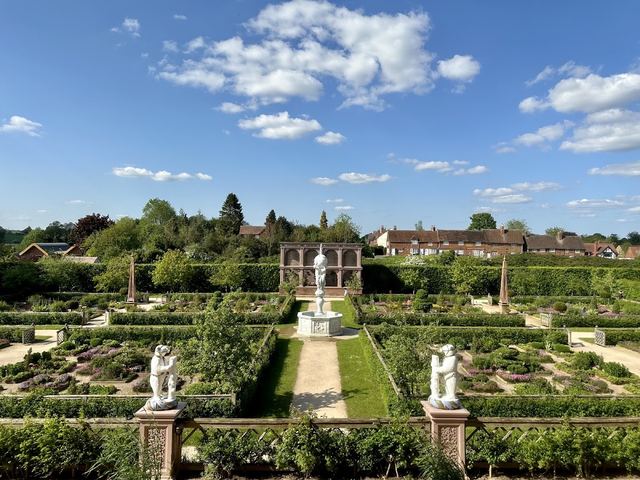
Kenilworth Castle
Slighted in 1649: one wall of the great Norman keep was breached and toppled, and the enormous artificial lake that had protected the castle for centuries - the Great Mere - was drained so it could never again be a defensive moat. The split keep still stands open to the weather.
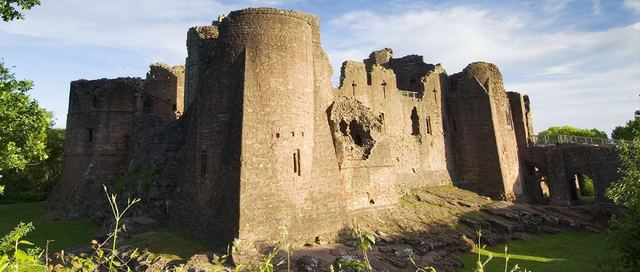
Goodrich Castle
Bombarded in 1646 by a purpose-cast mortar nicknamed 'Roaring Meg', which lobbed enormous exploding shells over the walls, then slighted the following year. Roaring Meg survives and is displayed at the castle - one of the few Civil War siege guns you can still stand beside.

Helmsley Castle
Surrendered after a three-month siege in 1644 and then slighted, which is why its great east tower is sheared clean down the middle - the outer half deliberately brought down, the inner half left standing like a cross-section drawing of the tower it once was.

Old Wardour Castle
Wrecked by mines sprung during the two sieges of 1643-44, and never repaired. Instead the Arundell family later built a new house nearby and kept the shattered old castle as a deliberately picturesque ruin in their landscaped grounds - a slighted fortress turned garden feature.
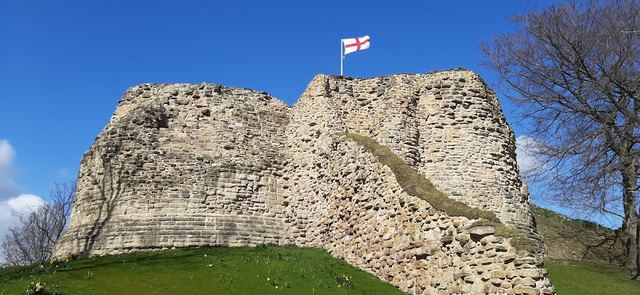
Pontefract Castle
One of the most stubborn Royalist holdouts of all, enduring three sieges. When it finally fell in 1649 the townspeople themselves petitioned Parliament to pull it down, weary of being besieged around it - and it was demolished so thoroughly that only fragments and the underground magazine survive.

Montgomery Castle
Scene of the largest battle of the war in Wales in 1644, after which Parliament held the crag-top castle. It was demolished in 1649 with such thoroughness that today only low walls trace the outline of what was once one of the Marches' great strongholds.

Aberystwyth Castle
A Royalist mint during the war, captured in 1646 and slighted with gunpowder in 1649 - so completely that the seafront ruin now scattered across its clifftop park gives little sense of the Edwardian fortress it used to be.

Bolingbroke Castle
The birthplace of Henry IV, besieged after the nearby Battle of Winceby in 1643 and slighted once the war was won. Its walls were reduced to the low, grassed-over footings that survive today, the hexagonal plan still legible at ground level.